Doc Abode
Enabling Bi-Directional Integration with Access Rio to Enhance Workforce Scheduling and Clinical Dispatch
Get in touch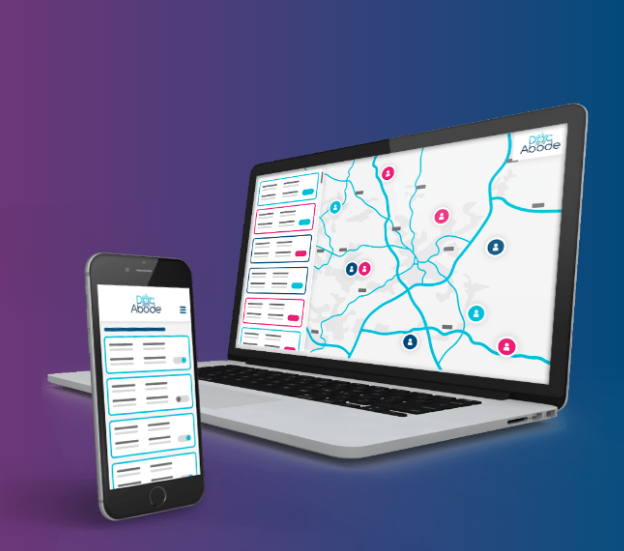
Background
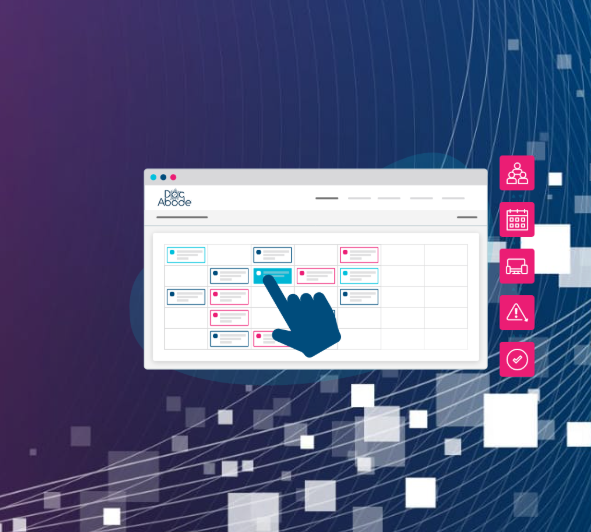
Doc Abode is an NHS-focused workforce scheduling and deployment platform designed to safely connect multidisciplinary clinical teams to patient demand in real time. It supports urgent community response (UCR), planned care scheduling, and dynamic/on-demand modules aimed at optimising clinician availability, proximity, and skill to meet patient needs. Doc Abode is used by NHS provider trusts and federations to move away from fragmented workforce systems and to improve responsiveness, capacity, and cost effectiveness.
Rio is an Electronic Patient Record (EPR) system used by many NHS trusts to manage patient records, appointments, clinical documentation and workflows. Real-time synchronisation between Doc Abode and Rio (bi-directional integration) promised benefits in reducing duplicate data entry, improving scheduling accuracy, and ensuring clinicians have up-to-date patient/context information when being allocated tasks or home visits.
The Need
Doc Abode identified that to fully maximise its scheduling and deployment efficiency, it needed seamless, bi-directional integration with Rio. Without such integration, clinicians using Doc Abode sometimes lacked the latest patient status, appointment changes or care plan updates stored in Rio; conversely, updates made in Doc Abode (for example new visit task assignments, clinician availability, dispatch of home visits) were not automatically reflected back to Rio. This led to risk of data mismatches, extra administrative work, delays in care, and potential clinical safety concerns.
Key objectives included: ensuring that task and appointment data flows both ways between Doc Abode and Rio in near real-time; enabling Doc Abode users to pull patient appointment, demographic, and clinical status data from Rio; enabling Doc Abode to post its scheduling/dispatch decisions back into Rio so that patient care teams see accurate, unified views; reducing manual updates and discrepancies; maintaining performance and reliability; and ensuring the integration was secure and compliant with NHS interoperability, data protection, and clinical safety standards.
The Solution
6B partnered with Doc Abode to design and implement a Node.js-based microservice that acts as the intermediary between Doc Abode’s scheduling platform and the Rio EPR. This service was engineered to support both inbound and outbound data flows, ensuring that information could move seamlessly in both directions. On the inbound side, the integration allows Doc Abode to pull appointment details, patient demographics, care plans, and schedule changes directly from Rio, ensuring that scheduling decisions are always based on the most current data. On the outbound side, when clinicians are scheduled, dispatched, or update the status of a visit within Doc Abode, those changes are automatically posted back into Rio, giving clinical and administrative teams full visibility within their existing EPR system.
To make this possible, 6B developed a robust mapping layer that translates between Doc Abode’s data model and Access Rio integration schema, standardising identifiers, status codes, and formats to ensure consistency. Security and compliance were built in from the outset, with secure authentication mechanisms, encrypted communication, audit logging, error handling, and retry logic to safeguard data and meet NHS interoperability and data protection standards. Performance testing was carried out to guarantee that the service could handle high scheduling volumes with low latency. Finally, the solution was validated through extensive staging and user acceptance testing with real-world workflows before being deployed into production, complete with monitoring, logging, and alerts to ensure long-term reliability and scalability.
The Impact
The bi-directional integration between Doc Abode and Rio has delivered several important benefits. First, there has been a noticeable reduction in administrative workload: clinicians and operations staff no longer need to manually update appointments or visit status across systems. Changes in Rio (appointments, cancellations, care plan updates) are now reflected in Doc Abode scheduling automatically, reducing risk of scheduling someone to a task with outdated or invalid status.
Second, scheduling accuracy and response times have improved. With real-time pull of Rio data, Doc Abode dispatch decisions now factor in the latest availability and appointment changes, which increases the reliability of clinician deployment and reduces missed or late visits. This improves patient care and reduces wasted clinician time.
Third, improved consistency and visibility across teams: because updates from Doc Abode (task assignment, visit completion etc.) now flow back into Rio, all staff using Rio have up-to-date information about patient and task status, which helps coordination, communication, and safety.
Finally, the integration has been built to scale, with robust monitoring and error handling, ensuring that as usage grows the system remains reliable. The node-based service has handled increased volumes without significant latency, and the framework put in place positions Doc Abode to add further integrations or data flows (e.g. clinical notes, outcomes) in the future.
Working with 6B has been a highly positive experience for Doc Abode. Their ability to understand both the technical requirements of integration and the operational realities of NHS services has been critical in delivering a solution that is robust, scalable, and aligned to real-world clinical workflows. The collaboration has enabled a seamless bi-directional integration with Access Rio EPR, supporting safer, more efficient coordination of care across teams.
“We used to have to call colleagues in the field to inform them of a new allocation and then they checked our EPR. Now we just create the job and they receive a notification and can go.” – UCR Coordinator
Feedback from operational teams highlights the impact on visibility and coordination. Teams report that having real-time access to task status, clinician’s locations and diaries in a single platform significantly reduces the need to chase updates and improves confidence in decision making across services.
– Dr Taz Aldawoud, CEO, Doc Abode